Every crossing time, offer and rule below comes from the operators' own sites or GOV.UK, and I checked them all on 11 November 2026. For a day out rather than a holiday, see my day trips to France guide.
The ferry routes to France
These are the routes from England to France, with each operator's own figures from its route pages.
| Route | Operator | Crossing time | Sailings |
|---|---|---|---|
| Dover to Calais | P&O Ferries | Approximately 90 minutes | Up to 11 a day |
| Dover to Calais | DFDS | 100 minutes | Up to 30 a day |
| Dover to Dunkirk | DFDS | Two hours | Up to 22 a day |
| Newhaven to Dieppe | DFDS | Around 4 hours (5 on certain overnight sailings) | Up to 6 a day, depending on the season |
| Portsmouth to Caen | Brittany Ferries | Around 6 hours by day, an average of 7 to 8 hours overnight | Up to 3 a day |
| Portsmouth to Cherbourg | Brittany Ferries | Around 7 hours 45 minutes, overnight | Up to 2 a week |
| Portsmouth to St Malo | Brittany Ferries | Around 11 hours 30 minutes, overnight | Most days |
| Plymouth to Roscoff | Brittany Ferries | Around 5 hours 15 minutes by day, an average of 9 to 10 hours overnight | Up to 2 a day, March to November |
Brittany Ferries says sailing times can vary with seasonal changes and weather conditions. It also says it no longer operates its Portsmouth to Le Havre route, so I have left that one out.
If you're going without a car, check the route first. DFDS does not take foot passengers on its Dover routes. P&O takes foot passengers from Dover to Calais, but tickets must be booked in advance. Brittany Ferries says foot passengers can travel on its Portsmouth to Caen, Cherbourg and St Malo routes.
Choosing a route
The choice is mostly between a short crossing and a long drive in France, or a long crossing and a shorter drive.
Short crossings from Dover. DFDS calls Dover to Calais its fastest crossing between the UK and France. P&O says there are often departures every 1 to 2 hours on the same route. DFDS says its Dunkirk port is less than 30 minutes from the Belgian border, which suits a trip that carries on beyond France.
Longer crossings further west. Brittany Ferries says its routes let you sail closer to your destination, saving driving time in France and spending on petrol, tolls and other travel expenses. Here is where it says each port leads:
- Caen: a fast motorway route to Paris, the Loire and southern France.
- Cherbourg: a modern motorway network to Paris.
- St Malo: fast road access to Brittany, the Dordogne and the Atlantic coast.
- Roscoff: easy access to all of Brittany, with fast road links to the Western Loire, the Dordogne and the Atlantic coast.
Where you start in the UK. Brittany Ferries says Portsmouth is within 2 hours' drive of London, with direct access from the M27. It says Plymouth is easily reached from the West Country and has good motorway links to Wales, the Midlands and the North.
Overnight sailings. On Portsmouth to St Malo, Brittany Ferries says sailings leave Portsmouth in the evening and give you an early arrival in St Malo. Its overnight Caen sailings also allow an early arrival, and it offers cabins on overnight sailings.
The choice is mostly between a short crossing and a long drive in France, or a long crossing and a shorter drive.
Finding a good price
The operators' own advice is simple. P&O says to book early to get the best deals, and you can sign up for its email alerts about offers. Brittany Ferries says its prices vary by season, when you book, and whether you travel on foot or with a vehicle.
These are the offers each operator listed when I checked on 11 November 2026. Offers change, so check the terms on the operator's site before you book.
P&O Ferries (Dover to Calais)
- Early Booking Offer: 15% off Long Breaks and Single tickets for travel between 1 January and 31 December 2027, if you book by 1 February 2027.
- Short Break Offer: 3 or 5 day breaks from £120, for travel until 31 December 2026.
- Day Trip Offer: from £65, for travel until 31 January 2027.
- Season tickets: P&O says these save money if you travel often.
DFDS
- Early booking: DFDS says you can save 15% on 2027 crossings if you book early.
- Short breaks: from £79 per car and up to 5 people on its Dover to France routes.
- Multi-trip packages: for frequent travellers, and DFDS says these can be amended and transferred.
- Newhaven to Dieppe concessions: 20% off for passengers with a disability, students aged 18 to 27, young people aged 18 to 25 and people over 60. These bookings must be made by phone or at the ferry terminal.
Brittany Ferries
- 3 days in France: from £154 return with your car.
- Day trips: from £30, with a same-day return or overnight sailings.
- Longer breaks: a 5-day short break from £204 and a 7-day break from £224.
Before you book
Read the operator's rules before you pay. These are the ones most likely to catch you out.
Check-in times
- P&O, Dover to Calais: check-in closes 60 minutes before departure for vehicles, and 90 minutes before for foot passengers and anyone travelling with a pet.
- DFDS, Dover to Calais: check-in closes 60 minutes before departure. DFDS advises allowing 120 minutes before check-in closes to get through all the controls.
- Brittany Ferries: 45 minutes before departure with a vehicle or on foot, and 90 minutes with a pet.
Passports
DFDS says a valid passport is compulsory for everyone travelling between the UK and France, and you must show it at check-in.
Pets
- P&O: pets must be booked in advance, spaces are limited and you cannot book them at the port. On Dover to Calais, pets stay in your vehicle unless you have booked the pet lounge.
- DFDS: on its Dover routes, pets stay in your vehicle. On Newhaven to Dieppe, pets can travel in your vehicle, and foot passengers can use onboard kennels or a pet cabin.
- Brittany Ferries: depending on the sailing date and ship, pets travel in your car, in the kennels or with you in a pet-friendly cabin. Dogs must be muzzled when outside your vehicle.
Your pet also needs the right papers. GOV.UK says that to take a dog, cat or ferret to an EU country, it must be microchipped and vaccinated against rabies, and you need an animal health certificate from your vet. The certificate is valid for 10 days for entry into the EU, and you need another one for each trip. If you live in England, Scotland or Wales, you cannot use a pet passport to enter the EU.
Vehicles and luggage
- P&O says you must declare your car's make, model and size when you book, including roof boxes, bike racks or trailers.
- P&O says all passengers must leave their vehicles during the crossing, including in motorhomes.
- DFDS says there are no baggage restrictions on Dover to Calais.
- On Newhaven to Dieppe, DFDS says foot passengers must leave luggage larger than 56cm x 45cm x 25cm in the baggage storage on board.
Driving in France
Documents. GOV.UK says you need your Great Britain or Northern Ireland driving licence. If you take your own vehicle, you also need your log book (V5C) and your insurance certificate. For a vehicle hired or leased in the UK, you need a VE103 certificate.
GOV.UK says you can use a UK photocard driving licence in France. If you still have a paper licence, you may need to update it to a photocard or get an international driving permit as well.
UK sticker. You do not need a UK sticker if your number plate has the UK identifier with the Union flag. GOV.UK says you must display one if your plate has:
- numbers and letters only, with no flag or identifier
- a GB identifier with the Union flag
- a European Union flag
- a national flag of England, Scotland or Wales
UK stickers have replaced GB stickers. If you have a GB sticker, GOV.UK says to cover or remove it.
Insurance. GOV.UK says all UK vehicle insurance gives the minimum third party cover to drive in the EU, and you do not need a green card. Check with your insurer whether your policy also covers theft or damage abroad.
Kit. DFDS lists these for your France driving kit:
- headlight converters
- a UK sticker, unless your plates have the UK logo
- a breathalyser kit
- a warning triangle
- a high visibility jacket or vest, kept within reach of the driver
Clean air stickers. GOV.UK says all vehicles driving in central Paris, Lyon and Grenoble must display a pollution sticker from 8am to 8pm, Monday to Friday. Other cities may also limit vehicle access, and you apply for a sticker on the French Ministry of Environment website. DFDS says you'll need this Crit'Air sticker in areas including Paris and Lille.
Rules on the road. GOV.UK says police give on-the-spot fines for driving offences, including speeding, and that the French drink-drive limit is a third lower than in England and Wales. DFDS says tolls are common on French motorways, so carry some cash or a card.
Winter. GOV.UK says vehicles in certain mountain regions must have winter tyres or chains from 1 November to 31 March. My skiing in France guide covers the details.
Near the ports. GOV.UK warns that people have tried to get into private vehicles to reach the UK illegally, including by placing obstacles on the Calais port road. It advises keeping your doors locked and not leaving your vehicle unattended.

Things to do
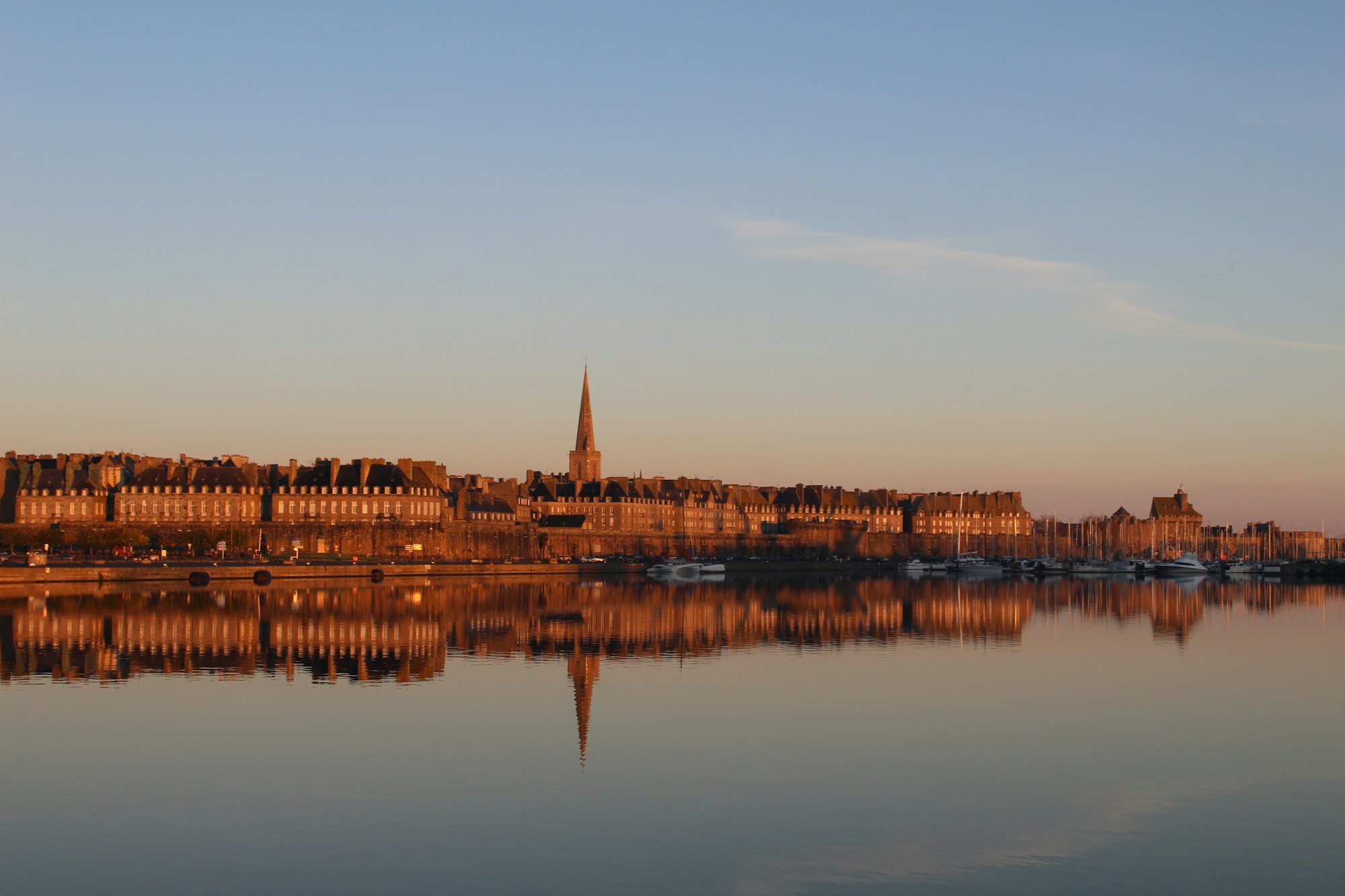
Brittany Ferries calls St Malo a beautiful, historic city and a tourist destination in its own right. It says Roscoff has botanical gardens and a thalassotherapy institute.
For ideas closer to the Dover crossings, I have separate guides:
- Day trips to France
- Things to do in Calais
- Top 10 things to do in Dunkirk
- Top 10 French beaches
- Skiing in France
Weighing up the tunnel instead? See my ferry or Eurotunnel comparison.
Money, insurance and health
Passports. France follows Schengen rules. GOV.UK says your passport must have been issued less than 10 years before the date you arrive, and must expire at least 3 months after the date you plan to leave.
Visas. GOV.UK says you can visit the Schengen area, including France, without a visa for up to 90 days in any 180-day period. At the French border you may be asked for proof of travel insurance, proof that you have enough money for your stay, proof of accommodation and a return or onward ticket.
The Entry/Exit System (EES). GOV.UK says you may need to register your fingerprints and a photo when you enter the Schengen area, and there is no cost. If you travel through the Port of Dover, this happens at the border before you leave the UK. EES can take each passenger extra time, so be ready to wait longer. Children aged 11 or younger do not have their fingerprints scanned, but may have their photo taken.
Food and cash. GOV.UK says you cannot take meat, milk or products containing them into EU countries. You must declare cash or travellers' cheques worth 10,000 euros or more.
Health cover. GOV.UK says you need a Global Health Insurance Card (GHIC) or a valid European Health Insurance Card (EHIC) to get medically necessary state healthcare in France. State healthcare there is not always free, and a GHIC or EHIC is not an alternative to travel insurance.
Travel insurance. GOV.UK advises buying travel insurance as soon as possible after booking your trip. It says your policy should cover your itinerary, your planned activities and expenses in an emergency.