Driving in France from the UK is mostly a matter of having the right paperwork and kit in the car before you reach the ferry. The rules are set by GOV.UK, the French authorities and, for the kit list, DFDS, and I've quoted each one below as it stood when I checked on 13 November 2026.
I've also put DFDS's three crossings to France side by side, since that is where Ferryu can help you book. Rules and fares change, so check the linked pages before you travel.
What UK drivers need to carry
GOV.UK says "You need to carry your UK driving licence with you." It also says you do not need an international driving permit (IDP) to drive in the EU, but "might need an IDP to drive in some EU countries and Norway" if you have a paper licence. The FCDO's France advice says the same about a paper licence: "you may need to update it to a photocard licence or get the correct version of the international driving permit (IDP) as well."
For the car itself, GOV.UK says to carry your vehicle log book (V5C), or a VE103 if the vehicle is hired or leased. On insurance, it says "All UK vehicle insurance provides the minimum third party cover to drive in the EU (including Ireland)" and that you do not need a green card, though you "still need valid vehicle insurance".
Then the UK identifier. GOV.UK says "You must display the UK identifier when driving a UK-registered vehicle abroad." If your number plate includes the UK identifier with the Union flag, you do not need a sticker. You do need one on the rear of the car if your plate has a GB identifier with the Union flag, a Euro symbol, a national flag of England, Scotland or Wales, or numbers and letters only.
Checklist: what to have in the car
DFDS lists these must-haves for driving in France:
- Headlight converters and a UK sticker, unless the registration plates have the UK logo on them
- A valid UK driving licence
- Car registration documents
- Proof of car insurance
- A breathalyser kit
- A warning triangle
- A high visibility jacket or vest, stored within reach of the driver
The French government's Bison Futé site lists safety equipment on board as "Reflective jackets" and "Warning triangle", and says seatbelts "must be worn at all times, by both adults and children, and both in the back and front seats."
I'd add two things from the FCDO. Vehicles driven in certain mountain regions between 1 November and 31 March "must be fitted with winter tyres or chains". And it says to "Keep vehicle doors locked in slow-moving traffic" and secure your vehicle if you leave it unattended.
Speed limits, alcohol and fines
Bison Futé gives these maximum speeds. "Highway" is its word for motorway.
| Road | Dry weather | Wet weather |
|---|---|---|
| Motorway | 130 km/h (80 mph) | 110 km/h (68 mph) |
| Dual carriageway | 110 km/h (68 mph) | 100 km/h (62 mph) |
| Other road | 90 km/h (56 mph) | 80 km/h (50 mph) |
| Built-up area | 50 km/h (31 mph) | 50 km/h (31 mph) |
It also lists 50 km/h on every kind of road when visibility is less than 50 m. DFDS's own France guide shows 80 km/h for A and B roads, so on single-carriageway roads I'd go by the signs.
The FCDO says "Police give you on-the-spot fines for driving offences, including speeding." On drink-driving, Bison Futé says "The French drink-driving limit is 50mg of alcohol in 100ml of blood." The FCDO says the legal limit "is a third lower than the limit for England and Wales", and that penalties include fines, loss of licence and prison.
DFDS adds that using a mobile phone or headphones while driving is illegal, and that speed camera detectors are forbidden: "you must turn off built-in speed camera warnings." It says children under 10 must be in an approved child seat and can't sit in the front.
Priority to the right and other French habits
This one catches UK drivers out. Bison Futé calls it "Priorité à droite" and says "anyone joining from your right hand side has priority over the main carriageway on which you are driving." You slow down and give way, "no matter the size of the adjoining road."
DFDS's list of extras is short: "Overtake on the left", "At intersections, give way to vehicles approaching on the right", and a horn is "generally prohibited in built-up areas, apart from in emergency situations." Its emergency tip is "Dial 112 anywhere in Europe to be connected to emergency services in the country you're visiting."
Tolls and the Crit'Air sticker
DFDS says "tolls are common on French motorways, so carry some cash or a credit card for payment". Some motorways have no barriers: service-public.fr says "free-flow" tolling is in place on the A13-A14 between Paris and Normandy, where you have 72 hours to pay online or at a tobacconist or newsagent with the Nirio system. A toll tag is charged automatically.
The sticker is the bigger surprise. GOV.UK's driving abroad page warns of "emission stickers (permits) in some European cities - you may need to buy these weeks before you go abroad". The FCDO says "All vehicles driving in central Paris, Lyon and Grenoble must display a pollution sticker from 8am to 8pm, Monday to Friday."
Order the Crit'Air sticker only from the official site, certificat-air.gouv.fr. For a vehicle registered abroad it lists "3,11 € + 2,00 € d'affranchissement hors France (soit 5,11 € par véhicule)", which is €5.11 including postage. You'll need a photo or scan of your registration certificate. Service-public.fr says there is a single sticker per vehicle, it is issued "without limitation of duration", and it goes "on the lower right part of the windshield". It says driving in a low-emission zone without one can bring a fine of up to €450, "in general" a flat-rate fine from €68.
The sticker is the bigger surprise.
DFDS crossings to France
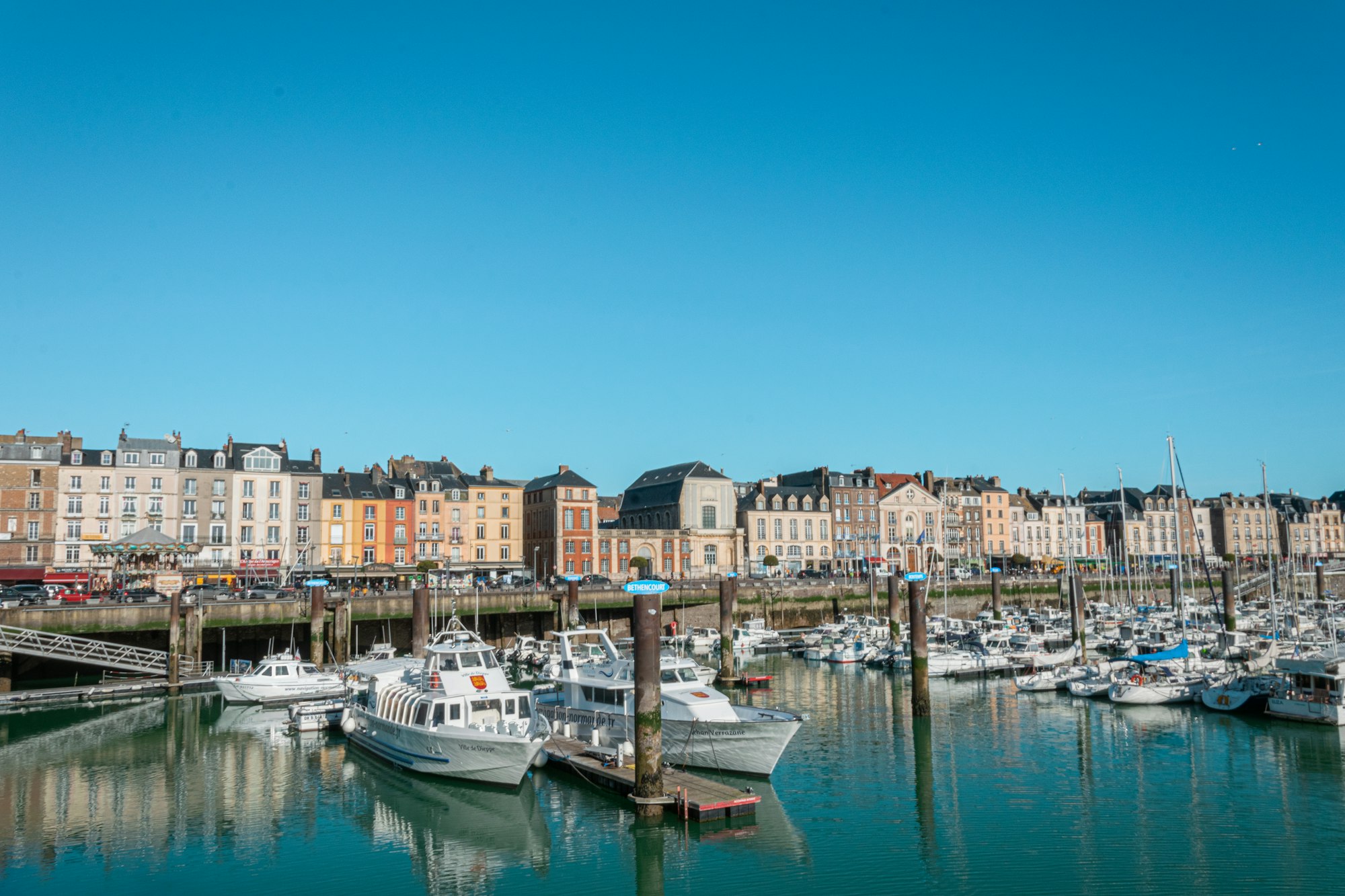
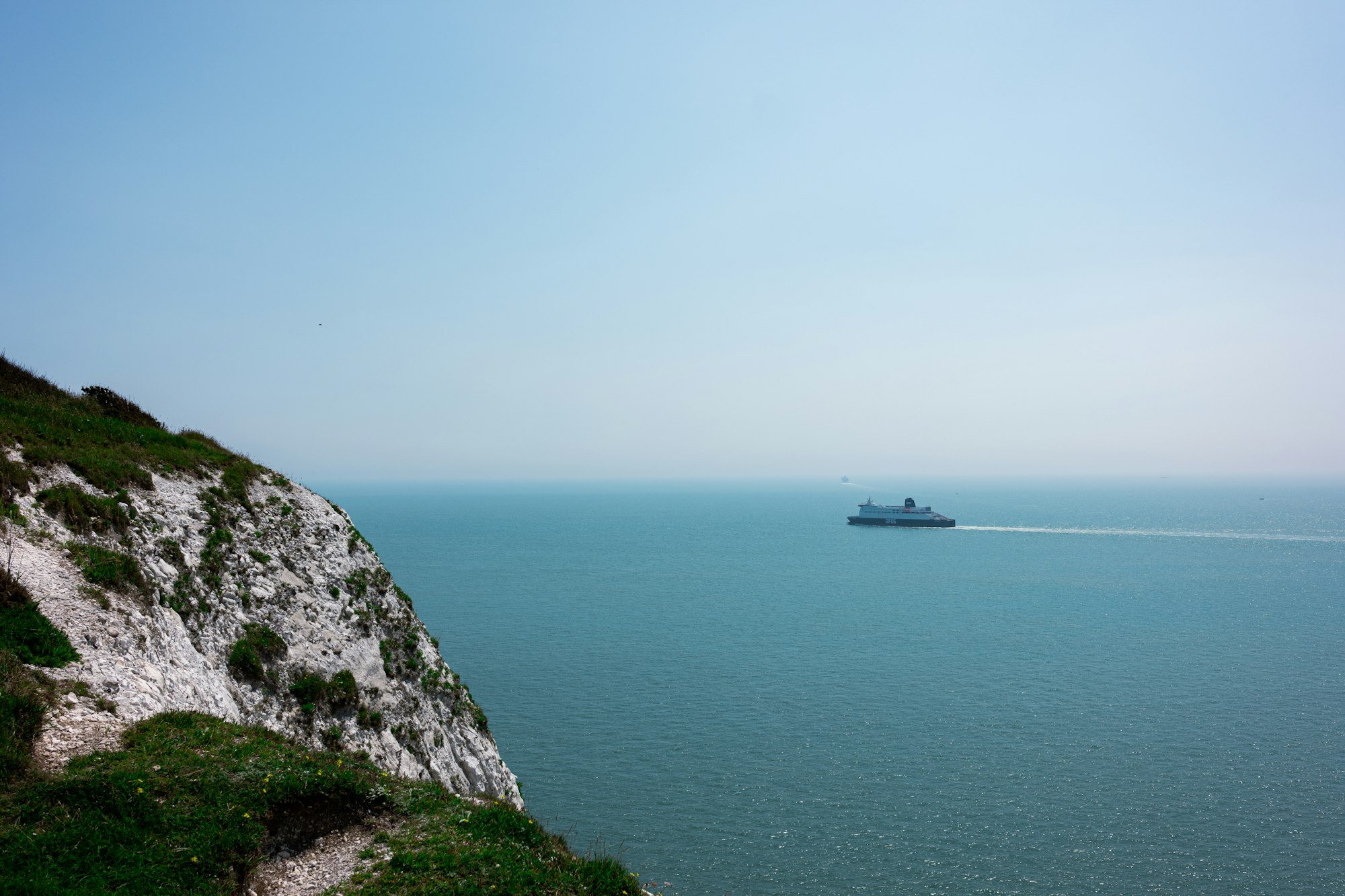
DFDS says "Our ferry crossings to France include Dover - Calais, Dover - Dunkirk, and Newhaven - Dieppe." Ferryu earns on DFDS bookings, so these are the three I'd compare. These are the figures on each route page when I checked on 13 November 2026.
| Route | Crossing time | Sailings a day | "From" fare, one way |
|---|---|---|---|
| Dover to Calais | 1 hour 40 minutes | Up to 30 | £114 for car + 5 people, including ETS |
| Dover to Dunkirk | From 2 hours | Up to 22 | £114 for car + 5 people, including ETS |
| Newhaven to Dieppe | Around 4 hours, 5 on some overnight sailings | Up to 6, depending on the season | £73 per car + 4 people |
Those are lead-in prices, and depend on date and availability. DFDS also contradicts itself on Newhaven to Dieppe: the route page's FAQ says crossings "currently start from £117", so the headline may not be what you're offered.
DFDS was advertising "Book early and save 15% on your 2027 crossing" on its Dover pages, with no end date shown.
Both Dover routes are vehicle-only: "Only vehicle travel is permitted on our Dover - France routes. Foot passengers are not permitted." That suits this guide, since you're driving. DFDS says its "Dunkirk and Calais ports in France are within 3 hours' driving distance of Paris", and for Dieppe "less than 2.5 hours' drive" from the capital.
Brittany Ferries and P&O Ferries also sail to France. My Ferry to France guide covers the other crossings, and if Paris is your destination, see Ferry to Paris for the drive from each port.
Questions about driving in France
Do I need an international driving permit to drive in France?
GOV.UK says you do not need an IDP to drive in the EU with a UK photocard licence. If you still have a paper licence, the FCDO says you may need to update it or get the correct IDP as well.
Do I need a UK sticker on my car?
GOV.UK says you must display the UK identifier. If your number plate carries the UK identifier with the Union flag you don't need a sticker; if it shows a GB identifier, a Euro symbol, a national flag or just letters and numbers, you need one on the rear.
What do I need in my car to drive in France?
DFDS lists headlight converters, a UK sticker if your plates need one, your licence, registration documents, proof of insurance, a breathalyser kit, a warning triangle and a high-visibility jacket within the driver's reach.
What is the speed limit on French motorways?
Bison Futé gives 130 km/h (80 mph) in dry weather and 110 km/h (68 mph) in wet weather.
Do I need a green card for France?
GOV.UK says you do not need to carry a green card to drive in the EU, but you still need valid vehicle insurance.
What number do I ring in an emergency in France?
DFDS says to dial 112 anywhere in Europe to reach the emergency services in the country you're visiting.